2026-09-03 ·
How Clay Soil Causes Yard Flooding in Plano After Spring Rains
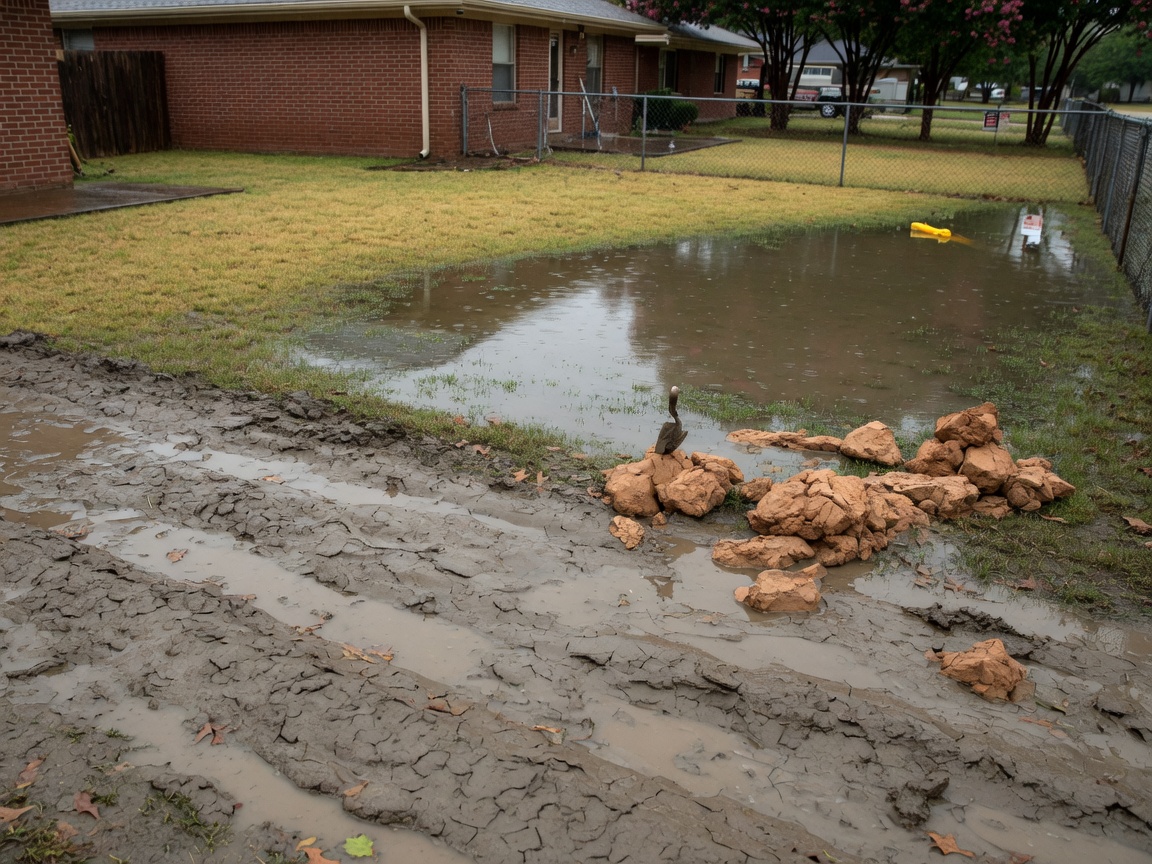
Clay soil across Plano causes yard flooding after spring rains because its low permeability traps water near the surface for days, turning moderate storms into standing pools within hours in flat lots common to West Plano and East Plano.
Clay Soil Properties in Collin County
Plano sits on heavy clay formations typical of North Texas that expand when wet and shrink when dry. These soils hold up to 40 percent more water than sandy mixes found farther east toward Dallas. During mild winters the ground stays somewhat compacted, so when occasional severe storms arrive in spring the first inch of rain soaks in slowly while the next two inches run across the surface. Homeowners in Legacy West notice this on newer lots where builders compacted the clay during construction. Older homes in Downtown Plano often sit on even denser subsoil because decades of foot traffic and irrigation have reduced natural pore space. The result is water that cannot percolate downward before the next rain cell moves through.
Spring Storm Patterns and Water Movement
Plano receives most of its heavy rainfall between March and May when warm Gulf moisture collides with cooler fronts. A single two-inch event can drop in under ninety minutes, overwhelming the top twelve inches of clay. Runoff then travels across the slight slopes that exist between Willow Bend and Oak Point Park, collecting in low spots behind homes. Because the clay does not release moisture quickly, yards remain saturated for three to five days afterward. This prolonged wetness stresses turf and encourages mosquito breeding in small depressions. Properties near the Plano Convention Center and Legacy Town Center see similar patterns because the surrounding commercial grading often directs extra sheet flow onto adjacent residential streets.
Neighborhood Differences in Flooding Risk
West Plano and Legacy West feature many homes built after 2000 with engineered grading that still struggles against clay. East Plano contains more 1970s and 1980s stock where original drainage was never designed for today's storm intensity. Downtown Plano lots tend to be smaller, so water has fewer places to spread before it reaches foundations. In each case the clay layer sits within eighteen inches of the surface, forcing any excess moisture to move laterally instead of downward. Residents in Frisco and Richardson report identical issues because the same clay belt extends across the county line. The pattern repeats after every spring system that stalls over Collin County.
Why Standard Yard Drains Fall Short
Most builder-installed downspout extensions and shallow swales only move water a few feet before it re-enters the clay. Once the soil swells, these shallow paths clog or collapse within two seasons. French drains installed at the proper depth cut through the impermeable layer and create a gravel corridor that lets water reach the perforated pipe quickly. Linking the system to a sump pump integration becomes necessary on lots where gravity discharge to the street is not possible. Regular french drain cleaning prevents sediment from the surrounding clay from sealing the pipe over time.
Practical Steps After Repeated Flooding
Measure the depth of standing water twenty-four hours after a storm; anything deeper than two inches indicates the clay is the limiting factor. Map the flow path from roof leaders and low spots to determine where a perimeter drain system would intercept the water. Check local permitting steps for drainage work in Plano neighborhoods before excavation begins. Many homeowners start with a single french drain installation along the rear property line and add sections as needed. Tracking costs in Collin County homes shows that material and labor scale with the length of pipe and the depth required to reach better-draining strata.
Maintaining Systems Year Round
Even well-built french drains require attention after the heavy spring rains subside. Remove leaves and silt from surface inlets before summer heat bakes debris in place. Inspect the discharge point near the street or alley to confirm flow is not blocked by new landscaping. Properties in Willow Bend that irrigate heavily during hot summers should flush the lines once in early fall to clear any accumulated fines. Consistent maintenance keeps the system functional through the next winter and into the following spring storm season.